


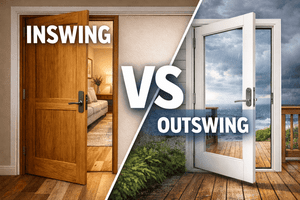
Inswing vs. Outswing Doors: Which Works Best for You?
Inswing vs. Outswing Doors: Which Works Best for You?
Choosing between an inswing or outswing door may seem like a minor technical detail. In reality, it affects how your space functions every single day. The direction a door swings influences furniture placement, traffic flow, weather performance, security, accessibility, and even long-term durability.
Builders often default to standard configurations. Homeowners sometimes choose based on what “feels normal.” But the best decision comes from understanding how each option performs in real-world conditions. This guide walks you through the differences, advantages, trade-offs, and ideal applications so you can determine which swing direction truly works best for your space.
What Is an Inswing Door?
An inswing door opens inward, into the room or building. You pull it toward you as you enter.
This is the most common configuration for residential homes, particularly for front entry doors and interior passage doors.
Common Applications
-
Front entry doors
-
Bedroom and bathroom doors
-
Closets
-
Interior office doors
Why Inswing Doors Are So Popular
Inswing doors feel intuitive because most residential homes use them. Hinges remain inside the home, which protects them from tampering. Installation is straightforward because framing standards are typically built around inswing units.
They also perform reliably in snowy climates. If snow accumulates outside, you can still open the door inward without resistance.
What Is an Outswing Door?
An outswing door opens outward, away from the interior space. You push it away from you to exit or enter.
Outswing doors are common in commercial buildings, tight residential layouts, and regions prone to high winds.
Common Applications
-
Small bathrooms
-
Utility or mechanical rooms
-
Patio and balcony doors
-
Commercial buildings and emergency exits
Why Outswing Doors Make Sense
Because they swing outward, they preserve interior floor space. That extra clearance can matter in compact rooms. They also offer structural advantages in high-wind environments since pressure pushes the door tighter into the frame rather than forcing it inward.
Key Differences Between Inswing and Outswing Doors
Space Requirements
Inswing doors require clearance inside the room. That swing arc can interfere with furniture, cabinetry, or appliances if the room is small.
Outswing doors shift that clearance requirement outward. This maximizes usable interior square footage but requires adequate exterior space such as a landing, porch, or hallway.
If you are working with a tight footprint, outswing often wins.
Security Considerations
Inswing doors keep hinges inside the structure. That prevents direct hinge tampering. However, forced entry pushes against the latch and jamb, which can fail if not reinforced.
Outswing doors are naturally resistant to forced entry because pressure pushes the slab into the stop. Modern security hinges with non-removable pins eliminate vulnerability from exposed hardware.
For high-security exterior applications, many professionals prefer outswing units when properly installed.
Weather Resistance
Inswing doors compress weatherstripping when closed. This creates a tight seal in moderate climates.
Outswing doors often perform better in severe weather. Wind pressure reinforces the seal instead of working against it. This makes them common in coastal or hurricane-prone regions.
However, outswing doors must be installed carefully to prevent water intrusion at the threshold.
Accessibility and Ease of Use
Inswing doors are generally easier to open when your hands are full. Pulling a door inward feels natural for most people.
Outswing doors can be beneficial in narrow hallways or tight bathrooms. They prevent someone from having to step backward to pull a door open.
Accessibility codes sometimes favor outswing configurations depending on layout constraints.
Emergency Egress and Safety
In residential settings, inswing doors are standard for bedrooms and bathrooms. They allow someone to pull the door inward if hallway access is blocked.
In commercial environments, building codes often require outswing doors. When a crowd presses toward an exit, an outward-swinging door allows faster evacuation.
Safety requirements should always be confirmed with local code officials before finalizing your decision.
When an Inswing Door Works Best
Inswing doors are often the right choice in the following situations:
-
Standard residential front entries
-
Bedrooms and private spaces
-
Areas with heavy snowfall
-
Larger rooms with adequate interior clearance
Advantages
-
Familiar operation
-
Protected hinge placement
-
Reliable in windy conditions
-
Simple installation
Limitations
-
Requires interior clearance
-
May restrict furniture layout
-
Less resistant to strong inward force unless reinforced
When an Outswing Door Works Best
Outswing doors shine in specific applications where space efficiency or weather resistance is critical.
-
Small bathrooms or powder rooms
-
Utility rooms with tight layouts
-
Patio or deck access
-
High-wind or coastal environments
-
Commercial buildings
Advantages
-
Maximizes interior space
-
Increased resistance to forced entry
-
Strong performance in high winds
-
Helpful for narrow hallways
Limitations
-
Hinges exposed without security hardware
-
Requires clear exterior space
-
Can be obstructed by snow or debris
Important Factors to Consider Before Choosing
Room Size and Layout
Measure the available clearance carefully. Sketch the swing arc. Consider how the door interacts with cabinets, vanities, appliances, and seating.
A door that looks fine on paper can create daily frustration if clearance is tight.
Climate Conditions
If you live in a snowy region, an outswing exterior door can become blocked. In hurricane-prone areas, outswing doors often provide better structural performance.
Weather patterns should influence your decision.
Building Code Requirements
Certain commercial applications require outswing doors. Some coastal regions have impact-rated specifications that favor outswing systems.
Always verify with local regulations.
Traffic Flow
Think about how people move through the space. In high-traffic areas, door direction can reduce congestion or improve circulation.
The right swing direction can make a room feel more open without changing its dimensions.
Long-Term Functionality
Doors are opened thousands of times over their lifespan. Consider how you actually use the space. Convenience matters more than aesthetics in the long run.
Frequently Asked Questions
Is an outswing door more secure than an inswing door?
In many cases, yes. Because pressure pushes the door deeper into the frame, outswing doors resist forced entry effectively. Security hinges eliminate the concern of exposed hinge pins.
Can I use an outswing door for my front entry?
Yes. Many modern homes use outswing front doors, especially in coastal or high-wind regions. Proper installation and weather sealing are essential.
Are inswing doors easier to install?
Typically, yes. Inswing doors are the industry standard in residential construction. Framing and threshold details are straightforward.
Which swing direction is better for a small bathroom?
Outswing doors are often better for small bathrooms because they preserve interior space. However, layout and privacy considerations should be evaluated.
Can I convert an inswing door to an outswing door?
It is possible, but it requires reframing the jamb, adjusting hinges, modifying the threshold, and potentially relocating hardware. Exterior conversions should be handled by professionals.
Do outswing doors leak more than inswing doors?
No, not when installed correctly. In fact, outswing doors often perform better under wind-driven rain because external pressure reinforces the seal.
Select the Best Swing for Your Design
There is no universal winner in the inswing vs. outswing debate. The better option depends entirely on your space, climate, security needs, and traffic patterns.
Inswing doors offer familiarity, simplicity, and widespread compatibility. Outswing doors provide space efficiency, enhanced wind resistance, and strong security benefits when properly specified.
The right choice is the one that supports how you actually live and use your space. Evaluate clearance, climate, and code requirements carefully. When in doubt, consult a door professional who can assess the structural and functional implications before installation.
A thoughtful decision now prevents daily frustration later.