

Parts of a Swinging Door: Components, Mechanisms & Accessories
Parts of a Swinging Door: Complete Guide to Components, Mechanisms, and Accessories
Swinging doors have a timeless charm, whether in old Western saloons, busy restaurant kitchens, or stylish modern homes. But behind the smooth swing is a combination of swing door parts, hinges, and accessories that work together to make it function. Understanding these swinging door parts, from rails and stiles to the swing door mechanism, helps you install, maintain, or even replace them with confidence. Whether you’re exploring old swinging door mechanisms for restoration or choosing swing door accessories for a new build, this guide will break down every component of a door so you can appreciate both the craftsmanship and the engineering involved.
Key Takeaways:
- Know the anatomy: rails (top/mid/bottom), stiles, and the door panel/core (solid wood or MDF) form the structure, affecting strength, privacy, and finish options.
- Frame + hardware = performance: a sturdy jamb/header frame and correctly rated double-action hinges, locks, strike/push/kick plates ensure smooth, safe bi-directional swing.
- Install and maintain smartly: accurate mounting, level alignment, and periodic hinge lubrication maximize durability and keep operation quiet; knobs/pulls finish the look.
Parts of a Swinging Door
Ever walked through an old wooden swinging door and wondered how exactly the thing works? Those creaky doors with the little windows you see in Western movies seem simple enough, but there's actually more to them than meets the eye. You might not realize there are several components that come together to make the door swing open and close. Before you know it, you'll be seeing swinging doors in a whole new way.
In this article, we're going to take one of those saloon doors apart piece by piece so you understand what's really going on. By the end, you'll be a swinging door expert and might even want to build one of your own. So grab yourself a sarsaparilla, pull up a seat at the bar, and let's get started demystifying the parts of a swinging door.
Top, Mid & Bottom Rail
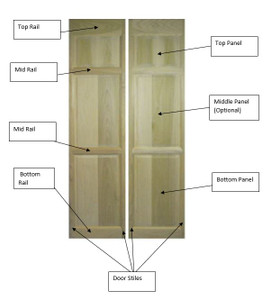
The top, middle, and bottom rails are three of the most important parts of a swinging door. They provide structure and support, allowing the door to function properly.
Top Rail
The top rail is the horizontal piece at the very top of the door. It connects the two vertical stiles and stabilizes the entire door. The top rail bears much of the weight and stress on the door, so it needs to be securely attached to the stiles. It is also the place where many doors attach to the header above for additional support.
Mid Rail
The mid rail, as the name suggests, is the center horizontal rail in the middle of the door. Not all swinging doors have a mid rail, but for larger doors, it helps prevent warping and sagging in the center. The mid rail also allows you to attach door panels, glass inserts, or other decorative elements in the center of the door.
Bottom Rail
The bottom rail is the bottom horizontal piece that connects the two stiles. It helps keep the bottom of the door square and prevents the stiles from splaying outward. The bottom rail includes a groove or channel where the bottom edge of the door panels or inserts fit. It may also have a lip or edge to hold weatherstripping or a door sweep in place along the bottom.
The placement and size of the top, mid, and bottom rails depend on the overall size and weight of the door. Heavier doors require more and sturdier rails to provide adequate support and prevent the door from becoming misshapen over time. The rails, along with the stiles, create the basic backbone and geometry of a swinging door. They are simple but integral parts that allow the door to function as a whole.
Door Stiles
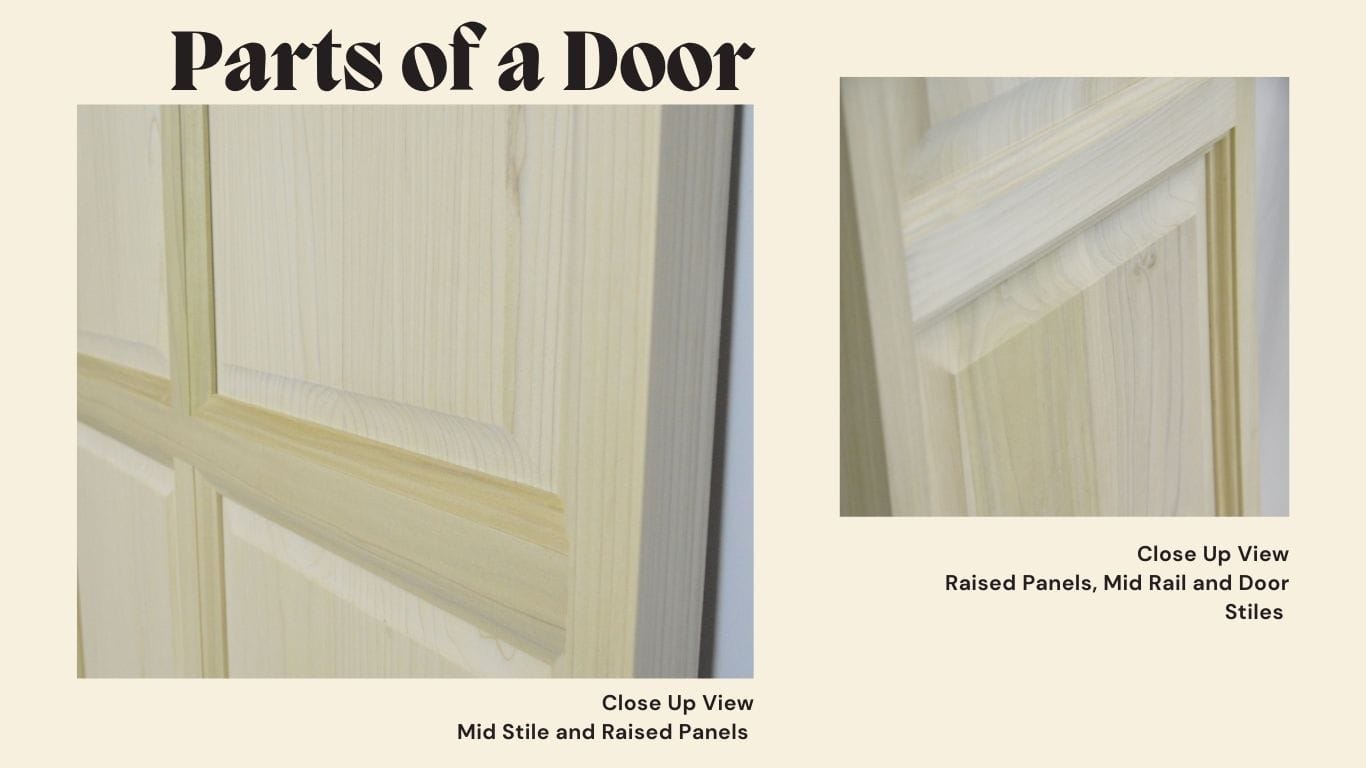
A door stile refers to the vertical or upright components of a door frame. There are typically two stiles in a door frame: one on the hinge side and the other on the latch side. These stiles provide structural support to the door and contribute to its overall stability.
Some door designs can have a mid stile to add additional stability. Mid stiles are used in door openings over 55" wide for double doors on most of our panel door designs.
The Door Panels – The Main Body
The door panel is the largest, central part of a swinging door. It's what gives the door its shape and size. The panel sits within the door frame and is attached to the hinges, allowing it to swing open and closed.
Core Materials
The panel's core material fills the space between the two "skins" or faces of the door. Solid core doors are recommended for swinging doors, and the solid cores include:
- Solid wood – Maximum durability, security, and insulation. Most expensive option.
- MDF material – Wood composite, best for painting, with strength, durability, and insulation.
The door panel, with all its options for materials, cores, and sizes, provides the customization needed for an entryway in any home or building.
Door Frame – Essential for Mounting the Door
The door frame is the skeleton that provides structural support for your swinging door. Without a properly installed frame, your door won't function correctly.
The frame consists of two vertical jambs and a horizontal header. The jambs run parallel to the doorway opening, while the header connects them at the top.
For best performance, choose a frame made of weather-resistant materials. Wood frames can warp over time, while steel or fiberglass options provide added durability.
Door Hardware – Knobs, Locks, and More
Knobs and Pulls
These allow you to easily grasp and open the door, with styles ranging from classic knobs to push/pull bars.
Hinges – The Swing Door Mechanism
Hinges are what make a swinging door swing. Common types include:
- Double-acting hinges – Swing both ways.
- Double action pivot hinges – Installed top and bottom, offering quieter operation.
- Double action spring hinges – Auto-close with spring tension.
Locks
Deadbolts and latch bolts provide varying levels of security.
Strike Plates
Provide the locking point for latches and bolts.
Push Plates and Kick Plates
Protect doors from impact and wear.
Learn, Build, or Upgrade Your Swinging Door
So there you have it—every part that makes up a swinging door. Understanding swinging door parts helps you choose the right swing door replacement or maintain your existing swing door mechanism for years of trouble-free use.
Whether you’re repairing an old swinging door mechanism, installing a new set of swing door parts, or simply curious about doors parts names, our team can help. Explore our collection of swing door accessories and hardware, or reach out for advice on choosing the right swing door mechanism for your space. Get a custom quote today.